
Prescott Roadway Technology Running Amok: Innocent People Pay the Price When Tech Fails or is Misused
Prescott City Council Session and Two 2026 AZ Bills to Address Roadway Technology

(with thanks and most research attribution to Jen Barber, author of Jen’s Two Cents Substack)
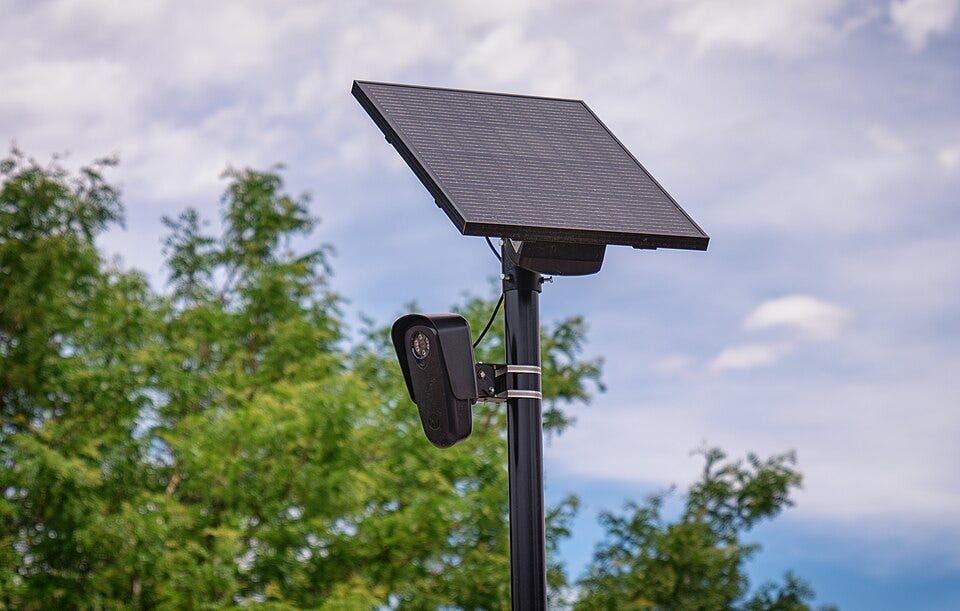
Prescott Pulse continues to follow what we believe to be technology overreach regarding AI monitored Automated License Plate Readers (ALPRs) and red light/speed radar photos right here in Prescott (and Prescott Valley, Chino Valley, and beyond). Arizonans deserve transparency, accountability, and the protection of our God-given rights—not a surveillance state that treats every citizen as a suspect.
Party lines mean nothing here—Arizonans do not want to live under constant tracking. We will not stand for our daily movements, destinations, and personal schedules being harvested, hacked, or weaponized against us, nor for being denied the fundamental right to access, review, and correct the personal data collected about us. Despite the widespread deployment of these invasive tools, there remains no comprehensive federal framework governing (ALPRs).
Prescott City Council Gets Involved
The Prescott City Council has included a discussion regarding the license plate readers on their January 27 Study Session and is scheduled for 1:00pm. To view the agenda and agenda packet, Click Here. The Prescott Police Department will be giving a presentation which you can review by Clicking Here. The public is generally not allowed to speak orally during City Council Study Sessions. Public comments for Council may be submitted through the City website by Clicking Here.
If you would like to speak to Council regarding the ALPRs in Prescott on January 27, you may address Council regarding matters not included (which ALPRs are not) at the 3:00pm Voting Session when agenda item #6, the Open Call to the Public, is called. Remember to complete a green speaker card and submit it to the City Clerk prior to the meeting being convened.
If you can’t make it to the January 27 meeting, you can watch it livestreaming by Clicking Here. You can always email City Council at city.council@prescott-az.gov, and police contact, Jason Small jason.small@prescott-az.gov. Ask them to review links from these videos to help them get up to speed on the surveillance technology currently in use: A. vulnerabilities in system, including pan/zoom AI - children exposed link, B. Flock CEO meltdown and Virginia town cancels contract link.
Learn About the 2 Legislative Bills and 2 Concurrent Resolutions
The 2026 Arizona legislative session is in its infancy, yet we are well on our way to matching the 2025 number of over 1,700 bills submitted. One theme is already emerging: surveillance is expanding, and transparency is being tested.
Senate Bill (SB) 1111 sponsored by Sen. Kevin Payne (R-LD27): Automatic License Plate Reader Systems; Requirements. Exempts captured plate data from public records requests, but allows disclosure pursuant to a subpoena. 1st read 1/15, referred to the Senate Appropriations, Transportation and Technology Committee (ATT) and Senate Rules Committee, 1/20 2nd reading, currently pending in the Senate Appropriations, Transportation and Technology Committee. LegiScan tracking SB1111
Prohibits use of captured plate data for non-law enforcement purposes, including personal use, political activity, and public records requests for commercial or non-commercial purposes. Allows ALPR systems to be used by agencies and law enforcement only if 8 detailed conditions are met.
SB1111 does not set a statewide data retention timeline for captured plate data before it must be deleted, or allow the people whose data/information is being collected to see what has been collected.
According to Jen’s Two Cents, which has been researching and reporting on ALPRs for a long time, “When retention limits are not clearly defined in law, short-term data collection can function as long-term location tracking, increasing the risk of misuse and unintended expansion of use over time, especially when paired with restrictions on public records access.”
Pulse says: comment on RTS (see below) and support the bill with amendments to allow citizens to access, review and correct incorrectly linked images, and to establish firm retention length.
SB1138 sponsored by Sen. Mark Finchem (R-LD1): Automated License Plate Readers. Establishes a new ALPR law section and defines key terms, limits how ALPRs can be used and adds training and access requirements, restricts public access, sets retention rules, and requires agency controls and audits. Creates a Class 1 misdemeanor and minimum $500 fine per image for unauthorized third-party release. Introduced and 1st read 1/15, 2nd read 1/20, referred to the Senate ATT and Rules Committees, currently pending in both. A hearing is scheduled for January 27, 2026, at 1:30 PM in SHR 109.
LegiScan tracking SB1138.
“Automated license plate reader” would be defined as stationary technology that automatically detects license plates and captures data associated with those plates for official law enforcement purposes,
It defines “official law enforcement purposes” as identifying stolen or wanted vehicles, stolen plates, human trafficking, and missing persons, and states it may also include information gathering related to active warrants, homeland security, electronic surveillance, suspect interdiction, stolen property recovery, including patrol operations and criminal investigations, canvassing license plates around crime scenes and checking partial plate numbers reported during major crimes to identify persons of interest,
ALPR data/images downloaded to an agency server must be stored for 90 days and then deleted unless the data becomes, or is reasonably believed to become, evidence in a criminal or civil case or is subject to a lawful action to produce records (subpoena),
Requires officers, when practicable, to verify an ALPR response through an authorized law enforcement database before taking enforcement action based only on an ALPR alert,
It requires department-approved training before an employee may operate an ALPR,
Limits access to law enforcement databases to authorized users,
Requires a criminal case number to access ALPR data,
ALPR data/images be collected and stored on a law enforcement agency server that is not maintained by a third party,
Agencies to route non-law enforcement requests through a records supervisor for processing under applicable law,
Using password-protected systems that document user access, and performance of regular system and user access audits, and
Access being limited to legitimate law enforcement purposes tied to an active case number or agency-related civil or administrative action.
SB1138 does not specifically address how ALPR data/images may be retained or further shared once provided to out-of-state agencies (like ICE or DHS) or entered into multi-agency law enforcement networks. ALPR data/images would not be subject to public review (even by the person whose data it is), except when disclosed pursuant to a duly authorized warrant, subpoena, or other applicable law. It does not allow the person whose data is being collected to see what has been collected, or provide a way for incorrect information to be corrected.
Pulse says: comment on RTS (see below) and support the bill with an amendment to allow citizens to access, review and correct incorrectly linked images.
Senate Concurrent Resolution (SCR) 1004 sponsored by Sen. Wendy Rogers (R-LD7) and co-sponsored by Sen. Mark Finchem (LD1). Ballot referral repealing photo enforcement of excessive speed or failure to obey a traffic control device.
House HCR2004 sponsored by Rep. Teresa Martinez (R-LD16) and co-sponsored by Reps. Carbone, Carter, Fink, and Hendrix, is the House companion to SCR 1004.
SCR LegisScan Tracking / HCR LegiScan Tracking
The SCR was heard in the ATT Committee Tuesday 1/20/26 and received a 6-4 “Do Pass” recommendation. If approved by the full Legislature, SCR1004 would send a measure to the ballot — giving Arizona voters the power to decide whether to ban traffic photo enforcement systems statewide.
Supporters say the goals are simple:
keep enforcement in the hands of trained law enforcement not private, for-profit vendors,
limit the financial incentives that can come with revenue-driven enforcement models,
eliminate a monopoly created by government, and
eliminate a conflict of interest with part of ticket revenue (11%) being routed to Clean Elections funding (which is then to the benefit of the elected officials who vote to approve the ticket revenue).
Those who oppose the SCR/HCR include Scottsdale Assistant Police Chief Rich Slavin who testified that residents’ number one request is more traffic enforcement, calling photo radar a “force multiplier” and citing collision reductions statistics (which were challenged by Sen. Rogers). Commander Nick DiPonzio of the Phoenix Police Department urged lawmakers to consider staffing realities as they debate the future of photo enforcement.
To Voice Your Opinions on the Legislative Bills Detailed Above, Use Request To Speak
Get signed up for Request To Speak RTS this week. You can create an account at home, but to activate RTS you may need to visit the Capitol and log in at one of the kiosks the first time you use the system.
*If you’re unable to make it to the Capitol, two organizations are offering help getting activated in RTS:
Maricopa County Libertarian Party (RTS sign-up & guidance):
https://lpmaricopa.org/request-to-speak
RTS setup assistance offered by Merissa Caldwell (EZAZ / PIE):
https://www.ezaz.org/rts
Curious About Your Vehicle’s Flock Data in Prescott?
Here are the steps to file a public record request for your vehicle Flock data in Prescott:
Go To www.Prescott-AZ.gov and open CITY CLERK TAB
To City Clerk: PUBLIC RECORDS REQUEST
Type in Subject: POLICE DEPT. FLOCK SAFETY CAMERA REPORT
Add YOUR Email, Name, Address, AZ Driver License number, Vehicle License Plate number, and Vehicle VIN number.
Hit Submit Button!
You’ll get a case # and confirmation with a 15 day window for the report.
Main Concerns About AI Driven ALPRs
One major danger of ALPR errors: Wrong license plate data gets linked to your name. If that plate belongs to a criminal with an active warrant, you could face a traffic stop turned nightmare—pulled over, wrongfully arrested, detained at gunpoint, separated from family, interrogated, or worse.
Consequences range from minor hassles (like false toll charges) to life-threatening armed detentions. These aren’t hypotheticals: CBS News verified over a dozen wrongful stops in a six-month probe, plus abuses like Kansas officers using ALPRs to stalk ex-partners. Innocent people pay the price when tech fails or is misused:
One man and his brother were held at gunpoint by law enforcement after his car was incorrectly flagged as stolen by an ALPR system. The car had already been recovered and police had failed to update the ALPR database to take his car off the “hot list” of stolen vehicles.
In Española, New Mexico, a 12-year-old was handcuffed after an ALPR camera misread the last number of a license plate on a vehicle driven by her older sister as a “7” instead of the “2” it actually ended with.
A month later, a 17-year-old honors student was held at gunpoint in Española on his way home from school after officers mistook his vehicle for one associated with a suspect sought in connection with a string of armed robberies.
In Aurora, Colorado, in 2020, a mother and her family, including her 6-year-old daughter, were pulled over at gunpoint and forced to lie face down on hot pavement. ALPR technology was central to the stop as police mistakenly flagged their Colorado license plate as matching that of a completely different vehicle from a different state, a stolen motorcycle registered in Montana. The incident, captured on video and widely condemned, led to a $1.9 million settlement from the city in 2024. Liability for legal settlements falls on the municipality, not on the third party technology provider.
DeFlock Prescott?
In a grassroots Prescott meeting earlier this month, participants voiced opposition to ALPR now operating (approx. 45 cameras) in our city. Key takeaways from that gathering:
People would prefer to work with our police officers directly, not initiated by AI.
Flock (the third party provider for Prescott ALPR cameras and database hosting) creates an infrastructure without owning any financial liability for errors.
Taxpayers are funding this quietly installed surveillance to the tune of over $155,000 per year (see Prescott 2025 budget line items).
“Safety” may be the message but “problems/risks/distrust” are the real byproducts of having AI surveillance in Prescott.
Risks to children and minors (e.g., exposed playground footage and past open-internet leaks), invasion of private property privacy near homes and driveways, and the de-anonymization of data when ALPR captures are linked to public/open databases—turning everyday movements into identifiable profiles far beyond local use.
There is a Facebook Group and a “coming soon” Instagram page: search for “DeFlock Prescott”. You can go to DeFlock.com to see where ALPR cameras have been installed and to add one not shown on the map. To keep up with the group’s activities, email DeflockPrescott@protonmail.com to be added to their email distribution list.
https://grok.com/share/c2hhcmQtMi1jb3B5_b3da19a3-c84e-4a14-9532-753b8ba853df
Thank you for posting this. I live in Prescott and am part of a group that is fighting this. I will be going live on Substack today at 2pm MST with a local colleague of mine - you are welcome to join us! https://romanshapoval.substack.com/p/ssliveflock